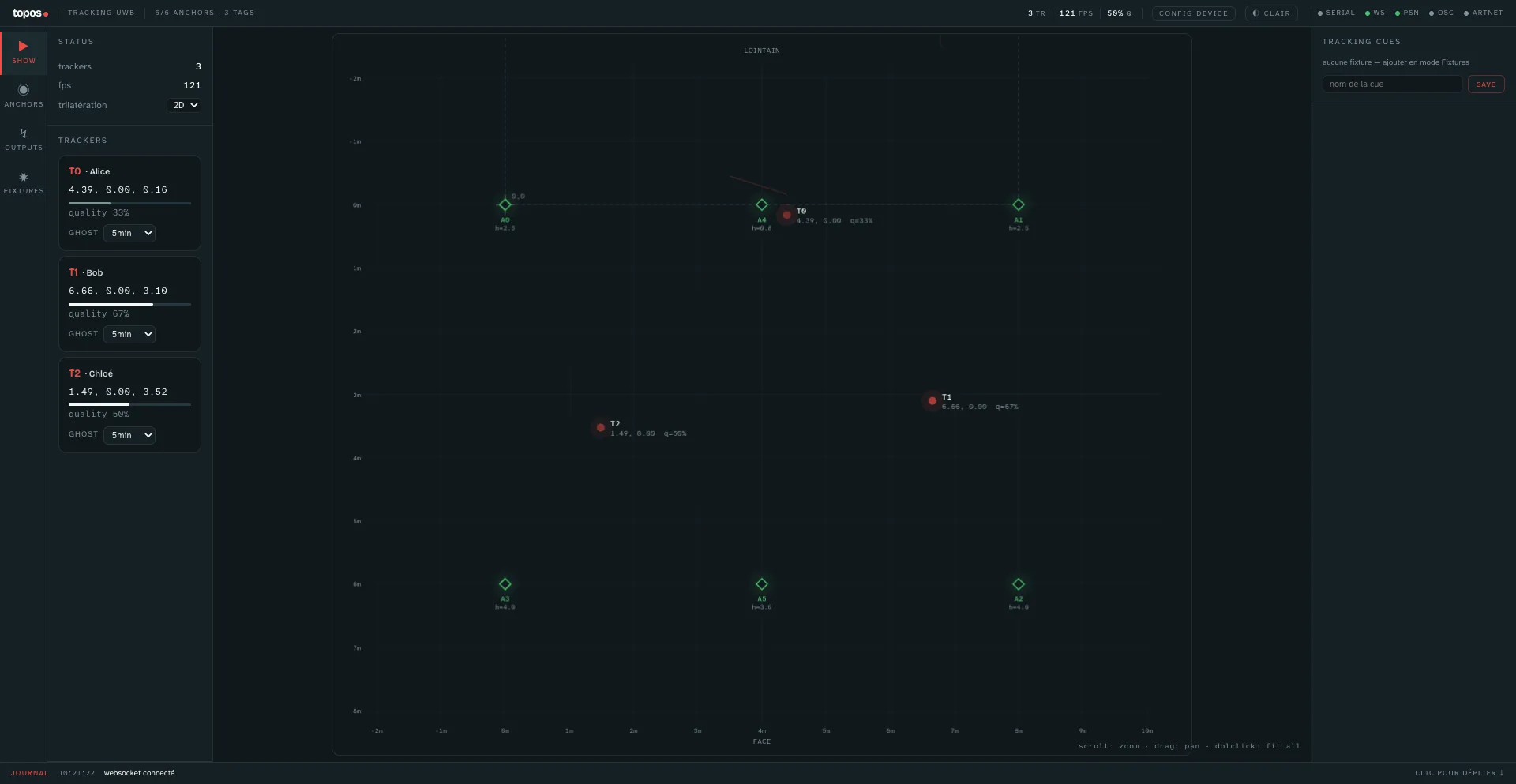
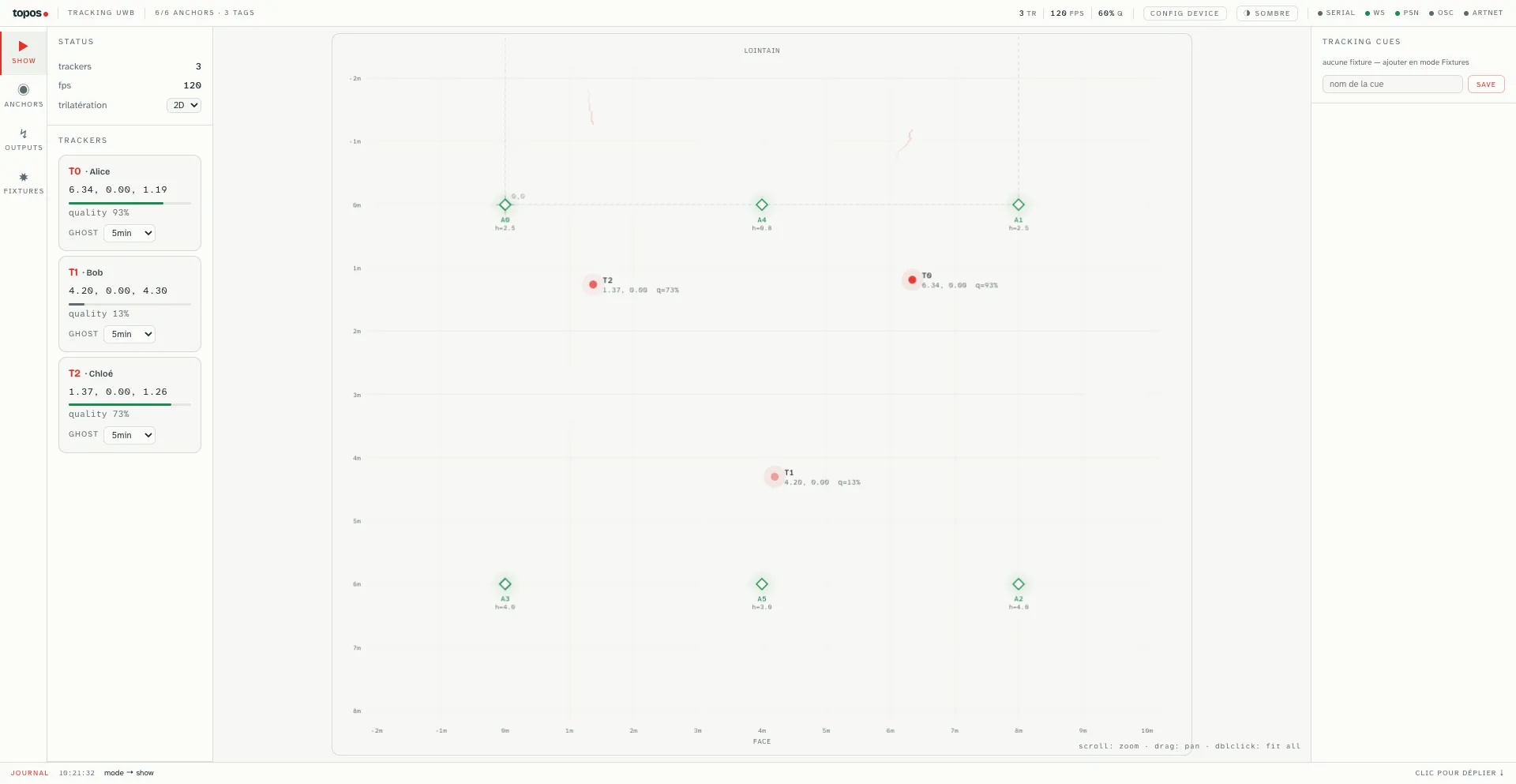
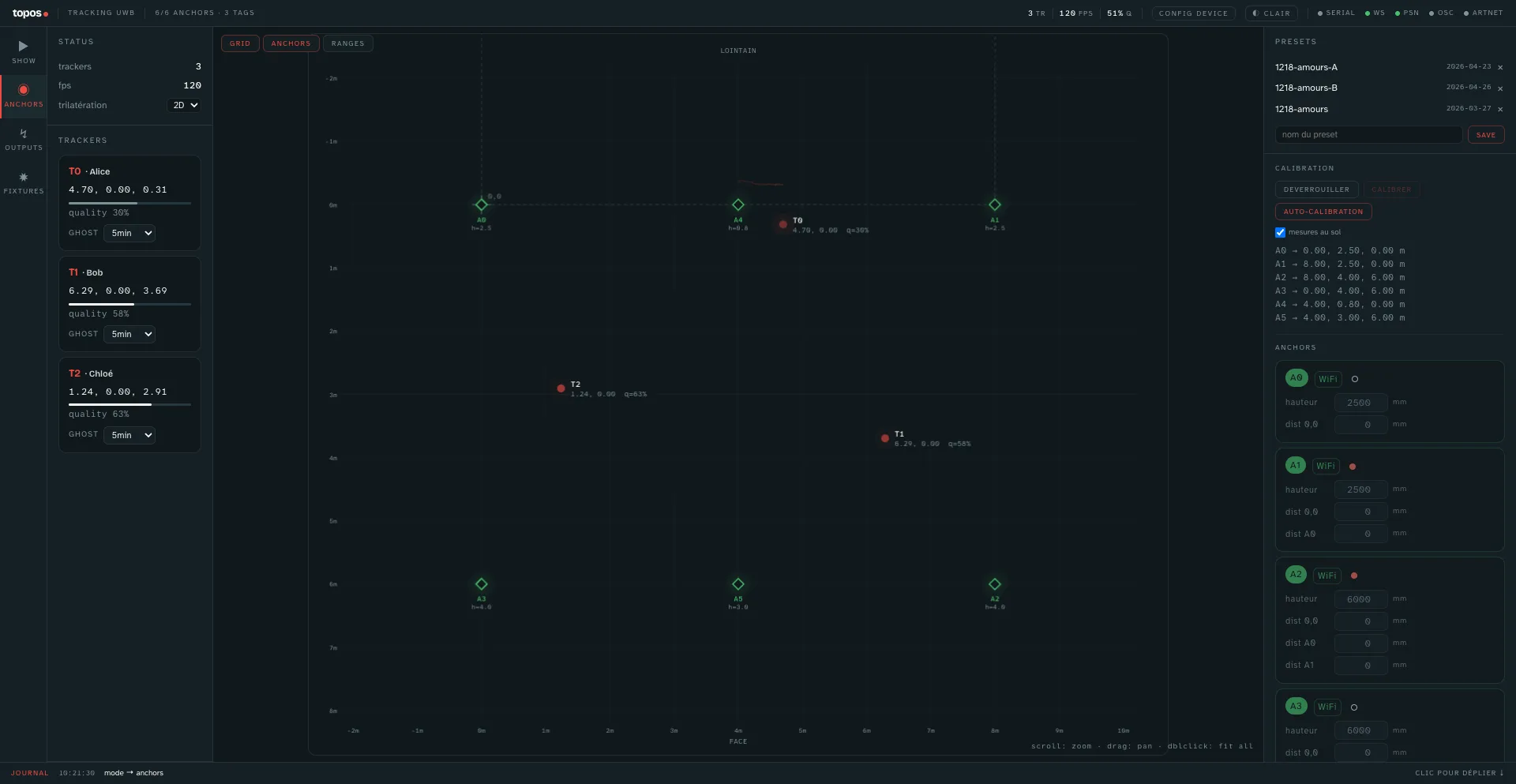
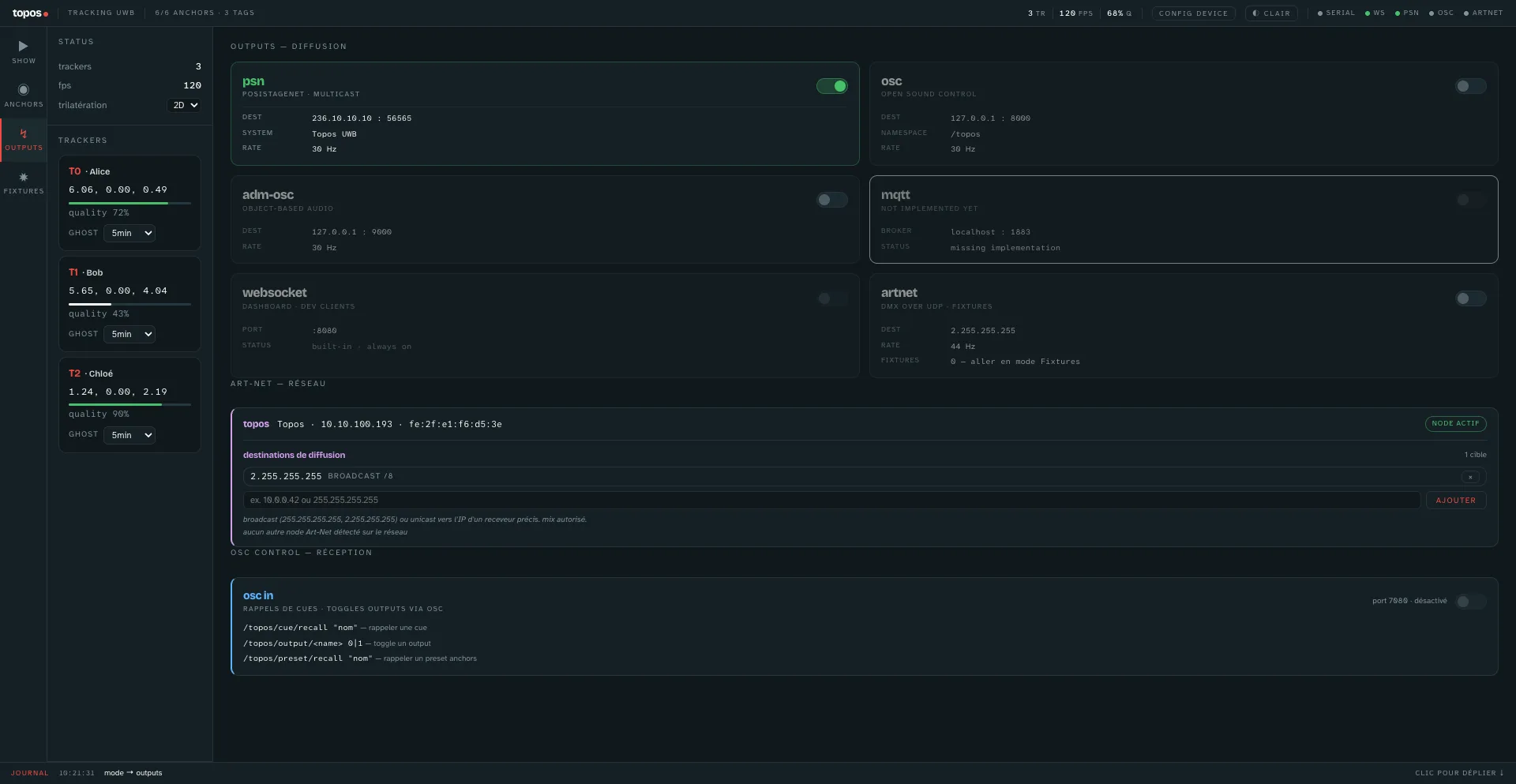
Captured in --simulate mode: six anchors, three performers, no hardware. This is exactly what you get after python -m topos.main --simulate circle.
Show — the operator’s view. The stage from above, downstage at the bottom, upstage at the top. Each performer has a name, a position in metres, a signal quality and a ghost timeout.Show, light theme — the same dashboard in light theme — for bright control rooms, one click switches over.Anchors — calibration. Height and distances of each anchor in millimetres, as read on the laser meter; Topos computes the positions. Presets save a whole venue.Outputs — the outputs. One switch per protocol, destination and rate in plain sight. PSN multicast to the console, OSC to audio.
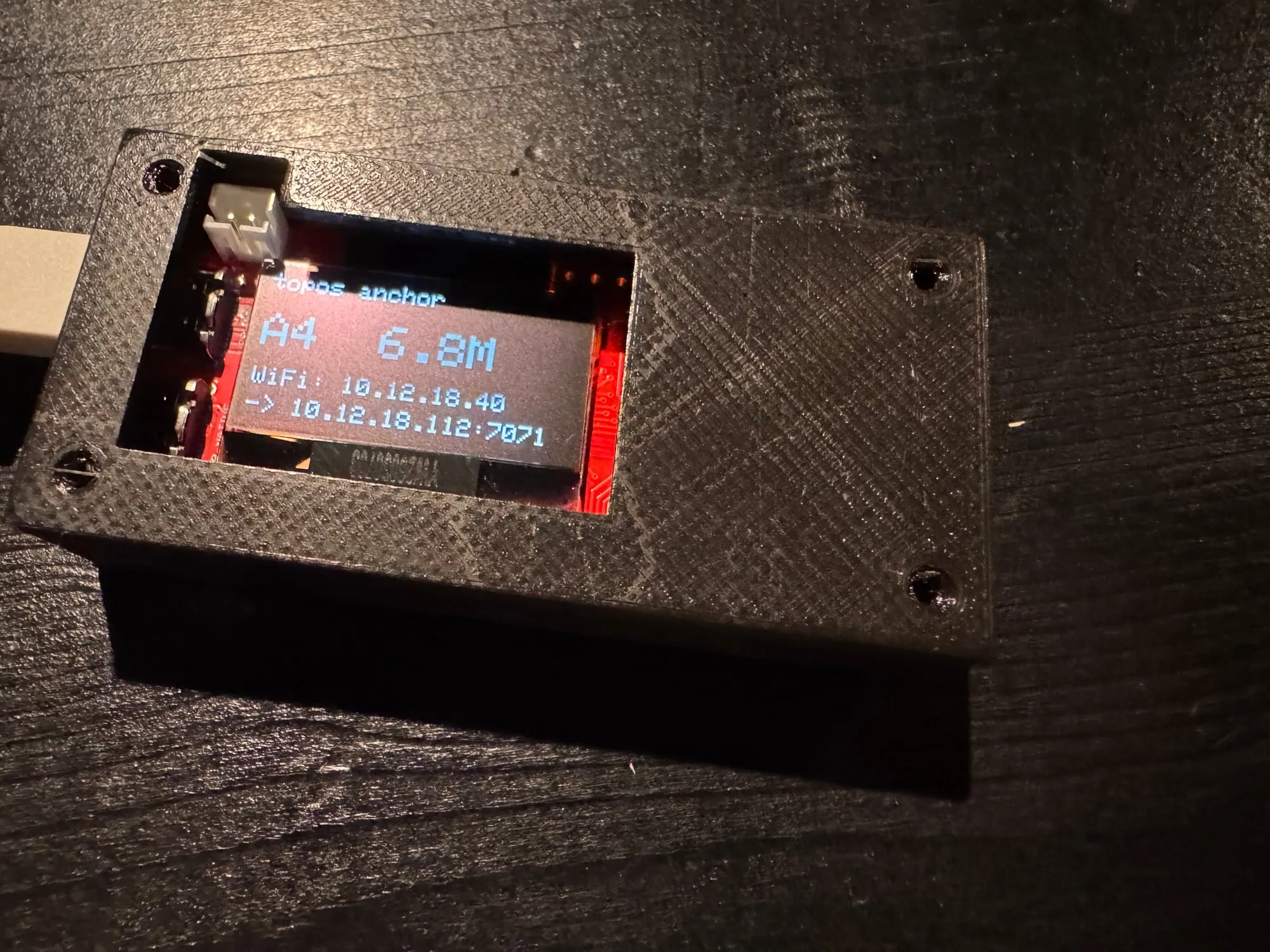
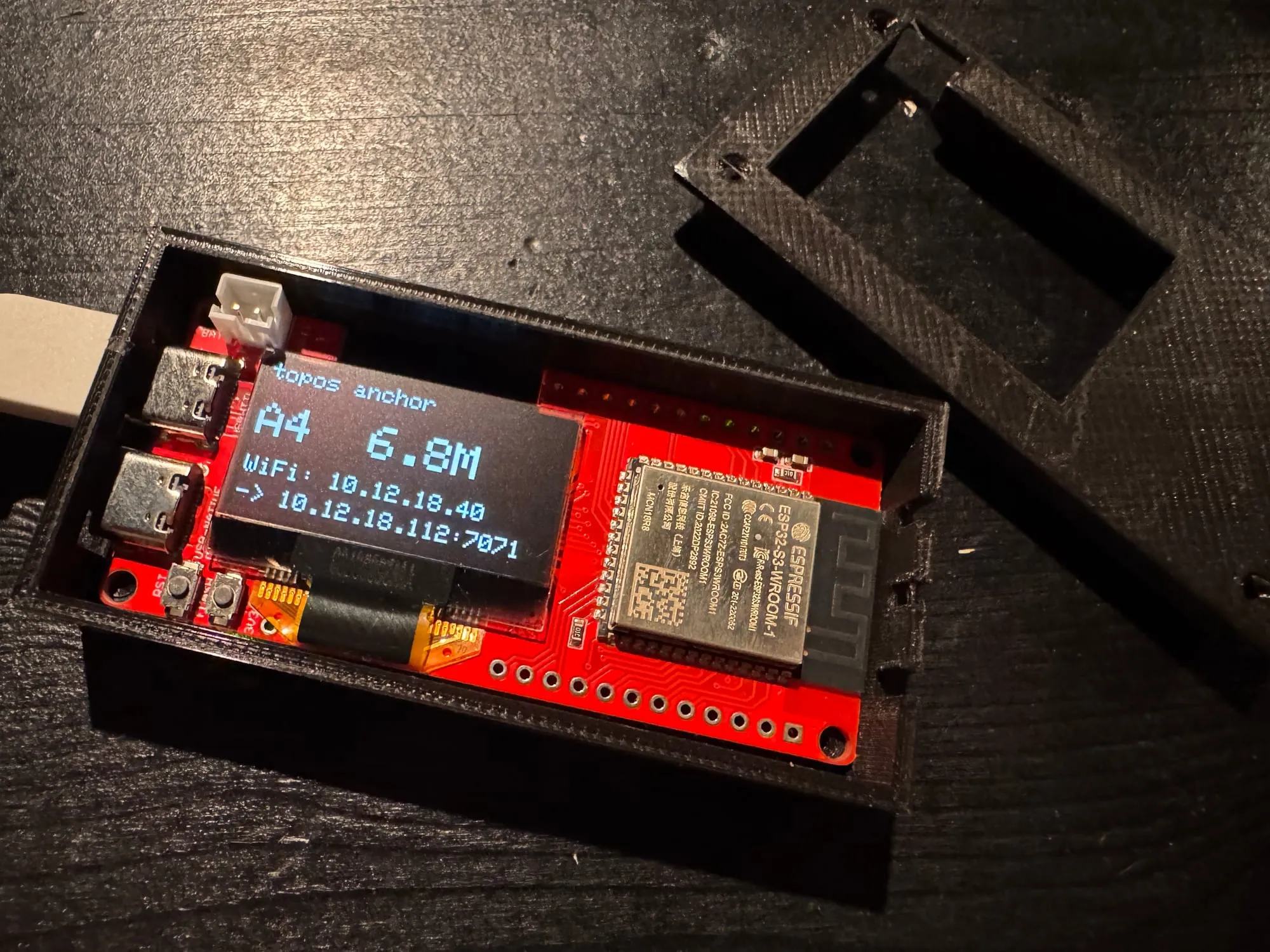
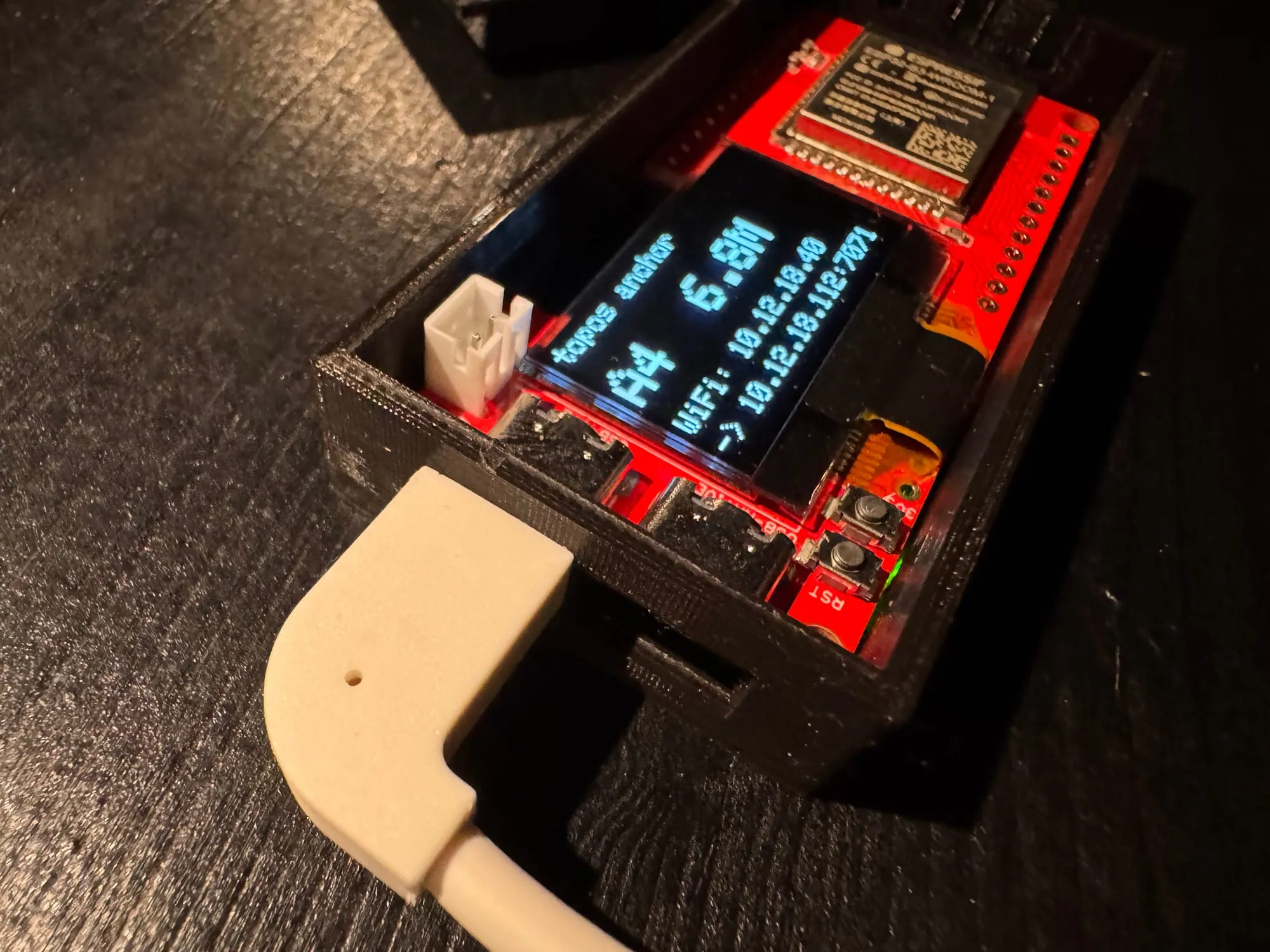
Anchor A4 powered up in its printed case, photographed at the workshop on 24 August 2026.
Anchor, closed — two-piece case, OLED screen on the front: identifier, last measured UWB range, the anchor’s IP and where the measurements go.Anchor, open — the MaUWB ESP32-S3 module sitting in the base, snap-fit lid alongside. No soldering, no screws on the module side.Detail — angled USB-C for power, RST and FLASH buttons within reach with the case open, battery connector for cable-free tests.
In the venueAnchors rigged at Douze Dix-Huit, a tag on a performer, laser meter in hand.
Videos“Tracking in five minutes” and “laser-meter calibration”, being shot.
topos.red — Real-time · Environment · Distance[email protected] · Code MIT · Hardware CERN-OHL-P · Docs CC BY-SA